Burnout during board prep is accumulated over weeks and months, and you can't out-study it. The fix is structural, not motivational: scheduled 5-to-15-minute breaks between study blocks, one full day off every week, weekly therapy, a psychiatric evaluation if you screen positive on SIG E CAPS, and a testing-anxiety workup if your COMSAE-to-COMLEX drop is 50 points or more. None of those are luxuries. They are part of the study plan that passes board exams, and skipping them is what wrecks scores in the back half of dedicated.
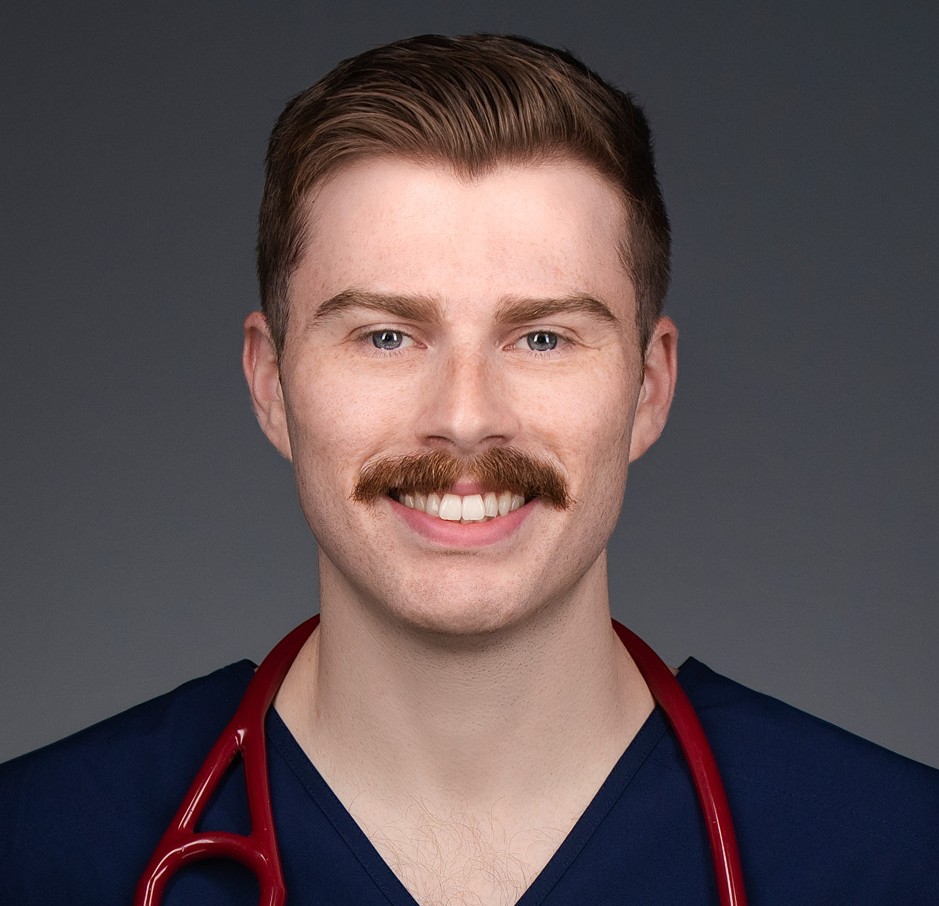
I'm Dr. Jean-Marc Lucas, a DO who scored 99th percentile on COMLEX and burned out badly enough during preclinical that I almost dropped out and ultimately walked away from a traditional residency match. I run a tutoring company now, and I've worked with hundreds of DO and MD students through dedicated. The students who pass without losing themselves all manage burnout deliberately. The students who fail almost always tried to push through it. This article is the playbook I wish someone had handed me before I lost 20 pounds and three months of my summer to flashcards.
What is med school burnout, and why is board prep when it crashes?
Burnout in medical training is the slow accumulation of unrecovered stress: physical exhaustion, falling motivation, sliding question accuracy on material you used to know, irritability, sleep disruption, and a creeping sense of emptiness around medicine itself. It builds quietly through preclinical, and dedicated is when it cashes the check. The eight-to-twelve weeks of dedicated COMLEX or USMLE prep compress every habit you've built into a single load-bearing column, and if recovery hasn't been built into the column, it cracks.
Most students don't recognize burnout because it doesn't feel like the dramatic version they read about. The signal is more like Anki cards that used to take 8 seconds now taking 25. Or rereading the same UWorld stem three times before you can hold it in your head. Or a Saturday spent doom-scrolling because the thought of opening a question bank produces a low-grade nausea. By the time most students name it, they've been in it for weeks.
The reason board prep is when burnout crashes is mechanical. Preclinical lets you cope with bursts and recoveries between block exams. Dedicated removes the recovery windows. You're now studying the same kind of material every day, with no class breaks, no end-of-block dopamine, no weekend trips home. The grind becomes the entire shape of your life, and the brain runs out of slack to absorb it.
I lived this. I went into dedicated already burned out from two years of 16-hour-a-day Anki, no gym, no friends, and a 20-pound weight loss because I'd convinced myself I didn't have time to cook. I still scored 99th percentile on Level 1, and the burnout was so entrenched by then that I never fully recovered from it. The score didn't save me. It just made the burnout louder, because now I had to keep performing at that level on rotations.
How do you know you're burned out and not just tired?
Tired is what one bad week of bad sleep feels like, and it resolves with a weekend off. Burnout is what eight weeks of unmanaged stress feels like, and it does not resolve with a weekend off because the underlying load hasn't changed. The clinical name for the criteria most psychiatrists use is the SIG E CAPS mnemonic from the DSM major depressive episode workup. Run it on yourself honestly.
- Sleep changes: insomnia, hypersomnia, or fragmented sleep
- Interest loss: no pull toward hobbies, friends, or activities that used to matter
- Guilt or worthlessness: a persistent sense that you're failing, that you're falling behind, that everyone else is doing better
- Energy loss: 8 hours of sleep doesn't refill the tank
- Concentration drop: reading the same paragraph or stem multiple times to retain it
- Appetite changes: eating much more or much less than baseline
- Psychomotor changes: feeling visibly slowed down or visibly agitated
- Suicidal ideation: any passive or active thoughts of self-harm
If you check five or more of those across a two-week window, you are not just tired. You are screening positive for a major depressive episode, and you need to talk to a psychiatric prescriber. Saying this out loud is part of the point of writing this article. Too many bright minds are lost to depression during medical training, and the field stigmatizes asking for help in the exact stretch when help is most useful. Reach out anyway. The two-week wait list for a psychiatric appointment is a lot shorter than a two-year recovery from a failed exam and a missed match cycle.
If you check fewer than five but several flags are present, you are in functional burnout. That's still a serious problem during dedicated. The interventions below are aimed at both groups, with the medical-treatment piece scaled to severity.
Why you cannot out-study burnout
The temptation when scores stall is to add hours. More UWorld blocks. Longer days. Earlier mornings. The students who do this almost always get worse, not better. The reason is that burnout doesn't reduce the input you can put into your brain. It reduces what your brain can do with the input. Extra hours of low-quality work compound the burnout without adding retention, which is why students who push 14-hour days through dedicated often score lower than students who held 8.
There's a related trap with motivation. Smart students often believe that if they could just "want it more" or "be more disciplined," they could outwork the symptoms. That isn't how the physiology works. Sleep deprivation impairs hippocampal consolidation, which is the mechanism that turns today's question review into next week's retrieval. Sustained cortisol elevation impairs prefrontal executive function, which is the mechanism that lets you reason through a clinical vignette in 60 seconds. You can want it as hard as you want. The biology is doing what the biology does.
This is the single hardest reframe for high-achieving students. Most of us got into medical school by outworking the load. Outworking the load doesn't work in dedicated, and trying to outwork burnout specifically makes burnout worse. The system change is the score change. Hours alone are not.
How do you build a board prep schedule that doesn't burn you out?
The schedule that works for our 1-on-1 students follows the same shape almost regardless of timeline. It's the schedule I wish I'd been handed in second year. Borrow it directly.
1. Schedule breaks INTO the day, not around it
Do not try to study 12 hours straight. The protocol I use with students is two hours of focused work, then 5 to 15 minutes off, repeat until done. The off-time is real off-time. Walk outside. Eat something that wasn't reheated from yesterday. Stretch. Do not check email, do not check residency forums, do not pop open Anki "for one card." Scheduled breaks taken intentionally are more restorative than unintentional 30-minute doom scrolls between blocks, and they protect the next study block from being mostly noise.
2. Schedule 1 to 2 hours at the end of every day for yourself
At the end of every study day, take at least one or two hours that are yours. Watch something. Cook a real dinner. See a friend if you have one within driving distance. Spend time with family. Doom scroll on TikTok if that's what genuinely relaxes you. The point is that the day has a clear stop, the brain has a recovery window, and tomorrow doesn't start with last night's leftover dread.
3. Take one full day off every week
This is the rule students push back on hardest, and it is also the rule that separates passing dedicated from burning out halfway through. One day off, every week, the whole way through. I recommend keeping Anki on the day off because cards skipped on day one become cards doubled on day two, and that's worse than just doing them. No practice questions, though. Most of the day is spent doing whatever you actually want to do. The schedule from our COMLEX Level 1 study guide walks through how to position the off day in a weekly cycle for maximum recovery.
The honest math: a 7-day, 8-hour workweek and a 6-day, 9-hour workweek both add up to 56 hours, except the second one comes with a meaningful recovery window and the first one does not. The total volume is the same. The cumulative damage is not.
4. Move your body, even briefly
I noticed during my own recovery that my best study days included the most movement. Even a 30-minute gym session in the morning made the rest of the day measurably more productive. You don't need an aesthetic CrossFit-bro routine. Three to four 30-minute walks or workouts a week are enough to keep the stress hormones in check and to sleep through the night, which is what protects question accuracy the next day.
5. Sleep on a fixed schedule and protect 7 to 8 hours
Sleep is non-negotiable for retention. The same 8 hours of study after 5 hours of sleep produces less learning than 6 hours of study after 8 hours of sleep. Fixed schedule matters too. Going to bed at 11 and getting up at 7 every day, including the day off, keeps the consolidation cycle stable. The Sunday-night insomnia spiral after a chaotic weekend is a real problem during dedicated and is mostly preventable.
When should you involve mental health professionals?
The honest answer is sooner than most students do. Therapy and psychiatry both have wait lists, and the version of you who recognizes that something is wrong is usually four to six weeks ahead of the version of you who finally calls a clinic.
Weekly therapy
Schedule one hour each week with a therapist, ideally before dedicated starts. One hour is not going to ruin your score. What it gives you is an unbiased third party who can help you actually identify and treat anxiety, depression, stress, and burnout, instead of trying to self-diagnose through Reddit threads at 2 AM. Use the school's counseling center if cost is an issue. Many medical schools include several free sessions per academic year as a baseline benefit.
A therapist also gives you a stable space to talk about the things you can't say out loud to classmates: the doubts, the impostor syndrome, the comparison spirals, the relationships that are straining under the load. I burned through preclinical without anyone to talk to because I didn't have doctors in my family and didn't know people went to therapy for this kind of thing. They do. The students who hold up best in dedicated mostly all have someone they talk to weekly.
Psychiatric evaluation if SIG E CAPS is positive
If you screen positive on five or more of the SIG E CAPS criteria above, schedule a psychiatric appointment. SSRIs, SNRIs, and atypicals are well-studied for major depressive disorder, and treatment effects begin to show up in the 4 to 6 week range. Antidepressants are not a personality change and they are not a sign of weakness. They are a tool. Using the tool is the medically correct response to the diagnosis. Too many physicians-in-training treat their own depression as the one diagnosis they're not allowed to have, and the field as a whole has paid for that culture in lost careers and lost lives.
Test-anxiety workup if your COMSAE-to-COMLEX gap is 50 points or more
If you have a previous COMLEX or USMLE attempt where your real exam score came in 50 or more points below your COMSAE or NBME practice scores, that pattern is testing anxiety, and it is treatable. The fix is structured exposure work plus, when appropriate, situational anxiolytics. Beta blockers, short-acting benzodiazepines, and sleep aids the night before the exam are all reasonable conversations to have with a prescriber. The diagnosis and prescription side of this can take weeks to titrate, so start early. The full breakdown of the score-gap pattern lives in our smart-students-fail-boards guide.
How do you recover from burnout once you're already in it?
If you're reading this and you're already in the hole, the recovery sequence is the same as the prevention sequence with one addition: you have to subtract first, then add. Most students try to add (more rest, more therapy, more structure) without subtracting the load that put them in the hole. Subtracting first is what gives the brain space to recover.
A reasonable subtraction protocol:
- Identify the two or three lowest-yield activities in your week. Likely candidates: a content-review video series you've already watched, a redundant question bank, a school-mandated review session that produces no new learning. Drop them.
- Cut your daily study target by 20 to 30 percent for one week, and use the reclaimed hours to sleep, move, and rest. This is counterintuitive and feels like backsliding. It isn't. You will retain more in the smaller window than in the larger one because the smaller window is less degraded.
- At the end of that week, reassess. If your motivation has started to return and your question accuracy on familiar material has stabilized, ramp back up to a sustainable 8-hour structured day. If not, extend the subtraction another week and call a therapist if you haven't already.
- If your exam date is fixed and the math doesn't work, consider a 2 to 4 week postponement. A short, intentional push is almost always cheaper than testing while still depleted. The postpone decision walks through how to evaluate this honestly in our COMSAE score guide.
The reason this works is the same reason the prevention protocol works. Burnout is a load problem, not a willpower problem. Reducing the load creates the conditions for the system to recover. Adding therapy and rest on top of a load that hasn't changed mostly fails.
What surrounding habits make burnout less likely to come back?
A few patterns show up consistently in students who finish dedicated without burning out, and they're worth borrowing.
- A community where you can be honest about how hard this is. Med school is socially isolating by design, and dedicated amplifies it. Find one or two people you can be honest with about scores, doubts, and bad days. The free Premeducated Skool community was built partly because most students don't have this in their personal lives during dedicated and need somewhere it actually exists.
- A non-medicine outlet you protect. Lifting, running, music, cooking, a creative project, a video game. Pick one, and don't let it get squeezed to zero. The students who burn out hardest are the ones who let their entire identity collapse into "med student" by the time dedicated starts.
- A boundary on residency forums and Reddit. The comparison spirals on the medical training subreddits are genuinely harmful during dedicated. Score posts and "what's your study schedule" threads will not give you anything you don't already know, and they will eat your evening. Block or mute them for the duration.
- An accountability structure that doesn't require willpower. A study partner with set hours, a tutor with weekly check-ins, a community with daily threads, or a clearly written daily plan you don't have to re-decide every morning. The fewer decisions you have to make about what to do next, the more energy you have left for the actual studying.
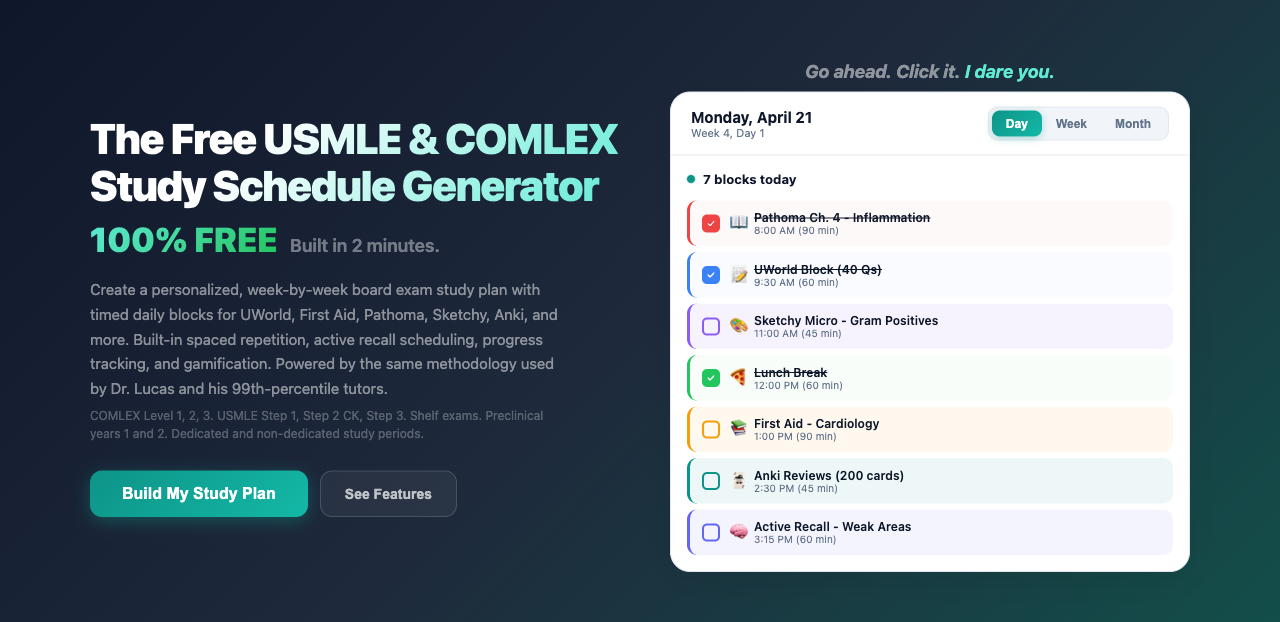
If a structured daily plan is the piece you're missing, the free Premeducated Study Plan Builder generates a personalized schedule based on your test date, baseline, and weak areas, with the breaks and the day off already built in. It uses the same structure I use with 1-on-1 students.
Frequently asked questions about burnout during board prep
How do I know if I'm burned out or just having a bad week?
A bad week resolves with one good weekend off. Burnout doesn't, because the underlying load that produced the bad week hasn't changed. The cleanest screen is the SIG E CAPS criteria: sleep changes, interest loss, guilt, energy loss, concentration drop, appetite changes, psychomotor changes, suicidal ideation. Five or more across a two-week window means you screen positive for major depression and need to call a psychiatric prescriber. Fewer than five with several flags present is functional burnout, which is also serious during dedicated and warrants schedule changes and a therapist.
Can I push through burnout for the last 4 weeks of dedicated and recover after the exam?
The honest answer is rarely. Burnout impairs retention and processing speed, so pushing through almost always lowers your exam score, which is the exact outcome you're trying to avoid. A 2 to 4 week postponement plus a real recovery protocol almost always produces a higher score than testing on the original date depleted. The push-through plan also tends to leave the burnout entrenched, which then bleeds into rotations or residency. Address it now or it follows you.
Should I take a day off if I'm behind on my study plan?
Yes. The day off is part of the study plan, not a reward for finishing it. Skipping the day off to "catch up" produces a lower-quality six days the following week, which puts you further behind, which makes you skip the next day off, and the spiral is hard to break. Keep the day off. Adjust the weekly volume target down if needed. A 6-day, 9-hour week with a recovery day beats a 7-day, 8-hour week with no recovery every time.
Will going on an antidepressant during board prep tank my exam scores?
There is no evidence that treating major depression with appropriate medication lowers exam performance. Untreated major depression absolutely lowers exam performance. The 4 to 6 week onset for SSRIs and SNRIs is the only timing consideration worth planning around, which is why early evaluation matters. Side effects are individual, and a good prescriber will work with you to find a regimen that fits your schedule. If you're screening positive, get evaluated. The risk of treating is much smaller than the risk of not.
How is burnout different from test anxiety?
Burnout is the result of sustained over-effort without recovery, and the signal is exhaustion, irritability, falling retention, and a slow loss of motivation over weeks. The fix is structured rest, a real day off, sleep, movement, and often a therapist. Test anxiety is acute and exam-specific, and the signal is palpitations, sweating, brain fog, GI symptoms, insomnia the night before, and a consistent 50 to 200 point practice-to-real-exam score gap. The fix is structured exposure through proctored mock exams plus, when appropriate, situational anxiolytics from a prescriber. Both can show up in the same student, and both are treated.
What if I can't afford a therapist or psychiatrist?
Start with the school's counseling center, which is usually included in your student fees and offers a baseline number of free sessions per year. Many universities also have psychiatry residents who run a low-cost clinic supervised by attendings. If those aren't available, the Physician Support Line at 1-888-409-0141 is a free, confidential peer-support service staffed by volunteer psychiatrists for medical students and physicians. The financial barrier is real, and so is the medical condition. Use whichever channel you can reach first.
## Join the free Premeducated Skool community If anything in this article landed, the next step is the free Premeducated Skool community. It's where most of the burnout, anxiety, and "is this normal" conversations actually happen out loud, with physicians who finished the same path and won't let you disappear for a week. Weekly live office hours with physician tutors, a 100-plus video library of question breakdowns, cloze-deletion Anki cards transcribed from my video library, daily question-and-answer threads, and direct DM access to me. Free, no pitch, real community. [**Join the free Skool community**](https://skool.com/premeducated?utm\_source=blog&utm\_medium=article&utm\_campaign=how-to-manage-burnout-during-med-school-board-prep)