
Failing COMLEX rarely costs you one retake fee. The real bill is a delayed graduation, an extra block of tuition that can run $50,000 to $70,000 at many DO programs, a residency start pushed back by a year, and at some schools the risk of being dismissed for missing a practice-test cutoff. Against numbers like that, a tutoring package in the low thousands is not the expensive option. It is the cheap insurance. This article walks through what a failure actually costs and where targeted help changes the math.
I run a COMLEX tutoring company, so read this with that in mind. I am not going to tell you that every DO student needs a tutor, because that is not true. What I will do is lay out the real downstream cost of a failed board exam, the kind nobody quotes you when you are deciding whether to spend money on help, and then show you exactly where that spend pays for itself.
What does it actually cost to fail COMLEX?
A failed COMLEX attempt is not a flat fee. It is a chain of costs that compound: more tuition, lost physician income from a delayed start, a weaker residency application, and at gating schools the chance of dismissal. The retake registration fee, often a few hundred dollars, is the smallest line item on the page. The expensive parts are the ones that move your graduation date.
Let me break the chain down into the pieces that actually hurt.
An extra block of tuition
When a failure pushes you into a leave of absence, a remediation track, or a delayed graduation, you are usually paying for more school. Many osteopathic programs charge $50,000 to $70,000 a year in tuition and fees, and a delayed year means writing that check again while earning nothing. Even a single extra semester of enrollment can run into the tens of thousands once tuition, fees, and living costs stack up.
Students underestimate this because the retake itself feels cheap. The registration fee is small. The semester of tuition wrapped around the retake is not.
A year of physician income you never get back
This is the line item nobody puts on the whiteboard, and it is the largest one. If a failure delays your match by a cycle, you start residency a year late, which means you finish a year late, which pushes your first attending year back too. A first-year resident earns roughly $60,000 to $70,000. A practicing physician earns several times that. Delay the whole timeline by twelve months and the opportunity cost runs well into six figures before you account for anything else.
You will never see that number on an invoice. It is real anyway.
Dismissal at gating schools
Some osteopathic programs will not let you sit for the real COMLEX until you clear a COMSAE cutoff, often a 450 on a four-hour practice exam. Miss the cutoff and you can be held back, remediated, or in the harshest cases dismissed. At those schools you can fail a practice test, not even the real one, and lose the degree you already paid for. I have watched it nearly happen to a student, and I will get to her in a moment.
A residency application that now has a flag on it
A failed board attempt does not stay private. Program directors see the attempt history, and in competitive specialties a failure can quietly move you down or off a rank list. The cost here is not a dollar figure you can quote cleanly. It shows up as fewer interviews, a less competitive match, or a scramble through the SOAP, each of which carries its own financial and career weight.
How a single practice test almost cost one student everything
Laura is a real former student of mine, and her testimonial video is on the Doctor Lucas DO YouTube channel with her LinkedIn in the description if you want to verify any of this. Her school required a 450 on a gating COMSAE before she could sit for COMLEX Level 1, and that school could dismiss her for failing the practice exam. She had already spent roughly $140,000 on two years of medical school. The degree was not the thing on the line. The practice test was.
She had tried a big-name group prep course first. It got her to a 327, well below the 450 she needed. The format was a flood of information with no one who actually knew her: three hours of lecture and 80 questions a day, and no guidance on how to review any of it. In her words, "I felt like I was being met with a flood of information."
Here is the part that matters for a cost conversation. Her problem was not knowledge and it was not hours. As she put it, "It's not about how much time I'm putting in, but how I'm using the time and how I'm changing my thinking." We rebuilt her strategy around how test writers actually think, drilled the thought process behind every question instead of just the answer, and held her accountable on her Anki. She climbed into the 440s, stalled at 440, 440, 439, then jumped to a 510 and cleared the gate by 60 points. She passed Level 1, passed Level 2, landed 18 residency interviews, and is now applying pediatrics.
The math on her case is brutal in the best way. A few thousand dollars of targeted help stood between her and walking away from a $140,000 education with nothing to show for it. That is the comparison this whole article is about.
Why is tutoring the cheaper option?
Tutoring is cheaper because it is priced against the retake fee in your head, but it competes against the delayed year you do not see coming. A 1:1 package commonly lands somewhere in the low thousands. A single extra semester of tuition, a year of lost physician income, or a dismissal each cost many multiples of that. When help moves you from a failing trajectory to a passing one, you are not spending money. You are avoiding a much larger bill.
Run the comparison directly. Tutoring at Premeducated starts at a base rate around $330 an hour, and full packages range from roughly $3,000 to just under $10,000 depending on how much rebuilding your situation needs. Now set that against one delayed year: $50,000 to $70,000 in repeat tuition is plausible, six figures in pushed-back physician income is plausible, and at a gating school the loss of the degree entirely is on the table. The expensive line is never the tutor.
There is a catch worth being honest about. Tutoring is only the cheaper option if it actually works, and it only works when the problem is one that coaching can fix. Throwing money at a tutor when your scores are already rising on their own is wasted spend. The value shows up when you are stuck, out of time, or out of attempts, and the clock is the thing driving the cost.
A quick way to see whether the math is in your favor:
- If a failure would delay your graduation or match by a cycle, the downstream cost dwarfs any package price.
- If your school has a COMSAE gate you are not clearing, the cost of missing it can be the degree itself.
- If you are on a final allowable attempt, the cost of getting it wrong is the entire career path, not a number.
- If your scores are climbing steadily on their own, you may not need to spend at all.
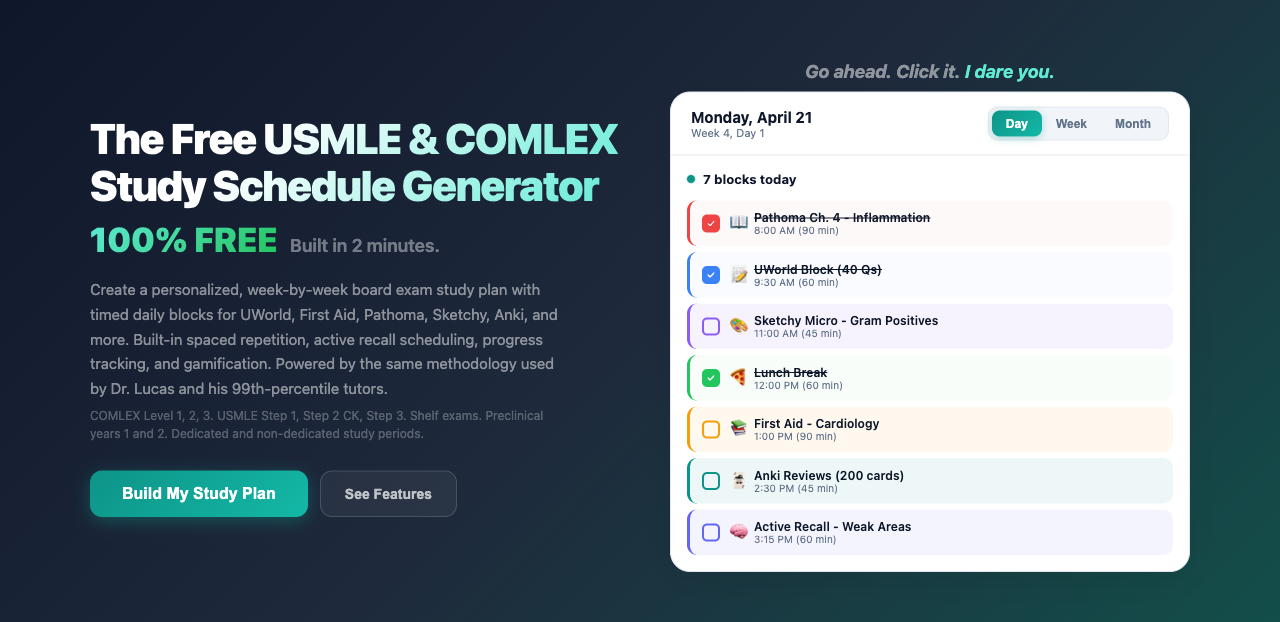
Students who want to put real numbers on their own situation can start with the free Premeducated Study Plan Builder, map their timeline, and then decide whether paid help is worth it.
When does paying for a tutor actually make sense?
Paying for a tutor makes sense when the cost of failing is high and your current trajectory will not clear the bar in time. That means a tight school deadline, a gating COMSAE you keep missing, a previous failed attempt, or a final allowable attempt where there is no margin for error. In those cases the downstream cost is so large that the package price stops being the real decision.
It does not make sense for everyone, and I would rather you keep your money than waste it. If your recent two COMSAE scores are at or above 450 and trending up, and you have a history of performing on standardized exams, you can usually close the gap on your own with a structured plan and a community around you. I wrote a full breakdown of who actually needs a COMLEX tutor and who does not if you want the honest version of that decision.
The students for whom the spend pays off tend to share a pattern. They are working hard and getting nowhere, retaking after changing everything except their strategy, watching real scores drop below practice scores, or running out of time on every block. If you are not sure which group you are in, that is exactly what a free strategy call is for. We look at your scores and your timeline and tell you honestly whether the money is worth it for you.
Frequently asked questions about the cost of failing COMLEX
What actually happens if you fail COMLEX Level 1?
You can retake it, but the failure stays on your attempt history that program directors see, and the timing fallout is the expensive part. A failure often pushes you into remediation or a delayed graduation, which can mean another block of tuition and a residency start delayed by a cycle. At schools with a COMSAE gate, failing a practice test can stop you from sitting for the real exam at all. The retake fee is small. The downstream costs are not.
How much does it cost to retake COMLEX?
The registration fee for a retake is a few hundred dollars, and that is the number most students focus on. The real cost is everything attached to it: a possible extra semester of tuition that can run into the tens of thousands at many DO programs, lost income from a delayed residency start, and the application damage from a failed attempt. When people ask about the cost of a retake, the fee is almost never the part that matters.
Is COMLEX tutoring worth the money?
For a student who is stuck, out of time, retaking, or facing a school cutoff, yes, because the package price competes against a delayed year that costs many times more. A 1:1 package in the low thousands is small next to repeat tuition or a pushed-back physician salary. For a student already scoring above 450 and trending up, tutoring is usually not worth it, and a free plan plus a community is enough. The point is to match the spend to the actual risk.
Can a school really expel you for failing a practice test?
Yes, at programs with a gating policy. Some osteopathic schools require a minimum COMSAE score, often a 450, before they will let you sit for COMLEX, and missing that cutoff can lead to remediation, being held back, or dismissal. That means you can lose a degree you already paid six figures for without ever taking the real exam. If your school has a gate like this, the cost of underperforming on the practice test is the highest cost on this entire page.
How do I know if my study problem is fixable with a tutor?
Look at your score trend and your timeline. Flat or declining scores despite real effort, a real-exam score far below your practice scores, consistently running out of time, or a retake after a failure are all patterns that targeted coaching addresses well. Rising scores with a comfortable timeline usually are not worth paying to fix. A free strategy call exists to sort this out before you spend anything, and you walk away with a plan either way.
Related guides
- Who actually needs a COMLEX tutor and who does not
- Why do smart med students fail board exams?
- What is a good COMSAE score for COMLEX Level 1?
- How to know if you have testing anxiety on board exams
- How long should I study for COMLEX Level 1?
Put real numbers on your own situation, for free
The cost of failing is specific to your school, your timeline, and your scores. A free Premeducated strategy call is a 45-minute video conversation where we walk through all three, build you a personalized study plan, and tell you honestly whether paid help is worth it for you. If your scores are already climbing, we will say so. If a single semester of help can save you a delayed year, we will show you the math.