
The day before COMLEX, do almost nothing exam-related. Take the full day off, fill it with low-stakes plans that keep you busy, and skip all new practice questions. Don't nap, don't drink caffeine in the afternoon, and don't work out within two hours of bedtime. If you sleep poorly under pressure, that's a conversation to have with a prescriber in advance, not a problem to solve on test eve. One extra day of cramming won't move your score. One genuinely restful day might.
Think of it the way an athlete thinks about the day before a competition. You wouldn't run a marathon the day before a race, or chase a powerlifting personal record the night before a meet. The work is already in the bank. The job now is to show up rested, calm, and sharp. Everything below is built around that one goal.
What should you do the day before COMLEX?
Treat the day before COMLEX as a recovery day, not a study day. At most, knock out your Anki reviews in the morning so the deck doesn't balloon, then close the laptop. After that, the whole point is to keep your mind off the exam and your body relaxed. The plans you make are doing real work here: a busy, pleasant day leaves less room to spiral.
Here's the short version of what helps and what backfires.
| Do this | Skip this |
|---|---|
| Take the full day off (morning Anki reviews at most) | New practice questions or any practice test |
| Fill the day with easy, enjoyable plans | Sitting alone refreshing your notes |
| A longer or more strenuous workout earlier in the day | Any workout within two hours of bedtime |
| Caffeine before noon, if you normally use it | Caffeine in the afternoon or evening |
| Go to bed close to your normal time | Cramming flashcards while lying in bed |
| Relaxation techniques to wind down | A daytime nap that steals your night sleep |
Make actual plans and commit to them. Spend time with family or friends, go visit the local petting zoo, vegetate on Netflix, or do literally anything that isn't studying and stressing. If test day requires travel, build the drive into the plan. Jam out to whatever gets you going in the car, Taylor Swift or Slipknot, then take yourself out to a nice dinner and pretend your ocean of student debt doesn't exist for one comfortable meal. The structure of a full, ordinary day is what keeps the anxiety from filling the silence.
Why shouldn't you study new material the day before?
Studying new material the day before COMLEX carries almost no upside and a real downside. One additional day of content won't meaningfully change a score you've built over weeks of dedicated prep. What it can do is shake your confidence right when you need it most. If you sit down for a fresh question block and bomb it, you walk into the exam rattled by a number that doesn't even count.
That's the same reason I tell students not to take a full practice test inside the final five days. A late COMSAE that comes back low has no time to be acted on, so all it does is plant doubt. The data you trust on test day should already be in hand from your last two weeks of prep, not scraped together at the buzzer.
Morning Anki reviews are the one exception worth keeping. Those are spaced-repetition cards you already know, so clearing them keeps your streak intact and your deck from piling up overnight. That's maintenance, not new learning. Once the reviews are done, you're finished studying. Resist the urge to "just look over" one more weak topic, because that urge is anxiety talking, not strategy.
How should you handle sleep the night before?
Aim to go to bed around your normal time and protect the conditions that let you fall asleep. The goal isn't a perfect night. Plenty of students sleep lightly before a big exam and still perform fine on adrenaline. The goal is to give yourself the best honest shot at rest without forcing it.
A few things make sleep easier the night before:
- Tire yourself out earlier in the day. A longer or harder workout in the morning or early afternoon can help you wind down by night. Keep it well clear of bedtime, with no exercise within two hours of when you plan to sleep.
- Wind down with relaxation techniques in bed. Progressive muscle relaxation and box breathing both work well. Use whatever has reliably calmed you down before.
- Don't lie there fighting it. If you end up studying the insides of your eyelids while you painfully lie awake, that's normal and survivable. Stay calm, run a breathing technique, and remember that one rough night does not sink a well-prepared test taker.
If insomnia is a known pattern for you, handle it before test eve. Prescription options for sleep exist, and the time to discuss them is at an appointment with a psychiatrist or your physician, not at 11 PM the night before. Springing an unfamiliar sleep aid on yourself for the first time the night before COMLEX is a gamble. You don't know how it'll hit you or how groggy you'll feel at 8 AM. Anything you take should be something you've already cleared with a prescriber and ideally tried before.
What about caffeine, workouts, and naps?
These three are where good intentions quietly wreck a night of sleep, so each gets a simple rule. Caffeine, exercise, and napping all feel productive in the moment and all can cost you the rest you actually need.
Caffeine is fine in the morning and a problem in the afternoon. If you're a regular coffee or energy-drink user, keep your normal intake but cut it off before noon so it clears your system by bedtime. If you don't normally use caffeine, the day before is not the day to start. Save any caffeine plans for the exam itself, where a measured dose can help.
Workouts help when they're early and hurt when they're late. A long or strenuous session earlier in the day can burn off nervous energy and make sleep come easier. The same workout in the evening does the opposite, leaving you wired when you're trying to settle down. Keep at least a two-hour buffer between exercise and bed.
Naps are the sneakiest trap of the three. A daytime nap feels restful, but it borrows sleep pressure from the night and leaves you staring at the ceiling when it matters. Skip the nap entirely so you're genuinely tired at bedtime. If you're dragging in the afternoon, take a walk or get outside instead.
How do you calm test-day nerves before they start?
Calm your nerves with a couple of breathing techniques you practice the day before, so they're ready when you need them. Anxiety the night before and the morning of is completely normal, even for students who are well prepared. Having a concrete tool beats white-knuckling it, and these take seconds to run.
Two breathing patterns are worth rehearsing:
- Slow deep breathing. Inhale for four seconds, hold for two, exhale for four. It's a modified box breath, and it pulls your nervous system down quickly.
- The physiologic sigh. Take a maximal inhale, add a second quick sharp inhale on top, then exhale slowly. Run it for about five minutes for the full effect.
Two more mental tricks help when the spiral starts. Create a little distance from the feeling by narrating it: "my brain is feeling anxious right now," rather than "I am anxious." That small reframe puts you a step outside the emotion. You can also pick a silly voice, something like Patrick Star, and mentally say your anxious thoughts in it. It's hard to stay terrified while you're laughing at your own internal monologue.
I use these the night before, again the morning of, and even between exam sections when needed. They work as prevention and as a reset. If a wave of panic hits mid-exam, stop, run your technique, and resume when you're steady. Even five minutes of recovery costs you only about three questions of time, and that's a trade worth making to save the rest of the block. If this kind of anxiety is a recurring story for you, it's worth understanding whether you're dealing with genuine testing anxiety well before exam week.
What should the morning of the exam look like?
A calm morning is just the natural continuation of a calm day before. Eat a smaller breakfast that's higher in complex carbs and protein and lower in simple sugars, so you stay satiated without a mid-morning crash. Go easy on fiber if you're not used to it, so you're not bloated and distracted. Plan to arrive about 20 minutes before the exam starts, since most centers don't open the doors until 8 AM and lines form fast.
Pack the night before so the morning is autopilot: ID, snacks and a light lunch, water, a sweater for a cold room, and Tylenol or an NSAID if screens give you headaches. Bring caffeine only if you normally use it, and bring a second round for the afternoon session if you do. Keep lunch light, because a heavy meal on break is a fast track to nodding off in the next section. Once you're there, take every scheduled break, get up and move, and keep running the breathing techniques that carried you through the night before.
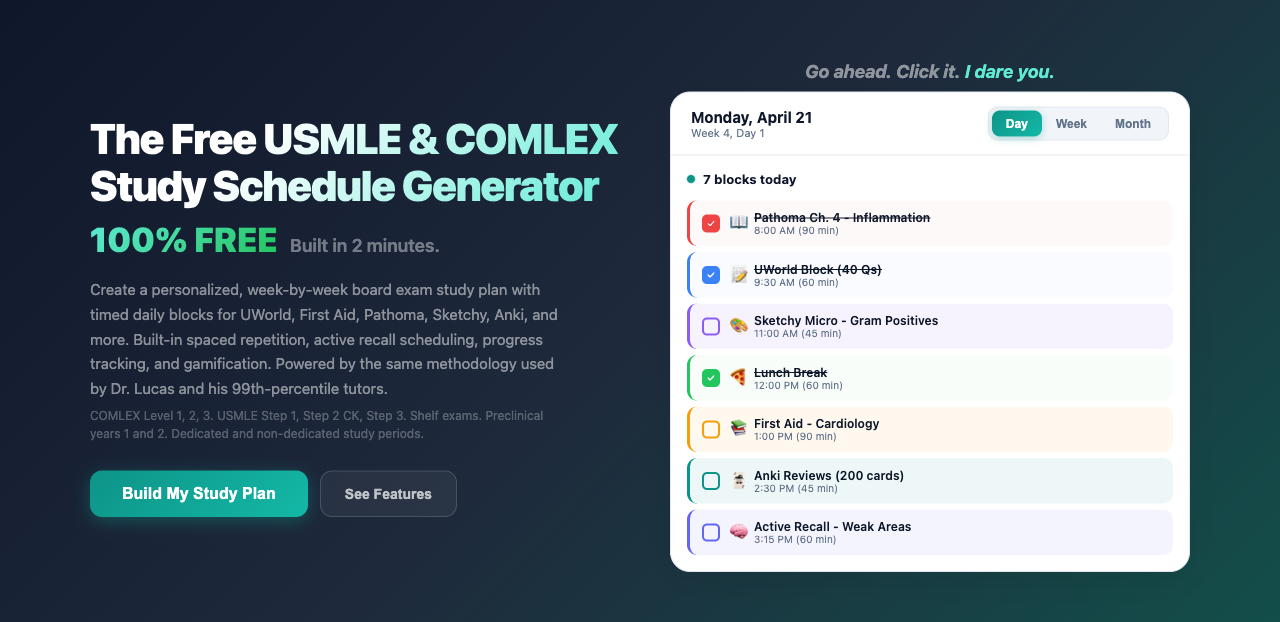
For a structured look at how the week leading up to test day should be built, the final two weeks before COMLEX guide lays out the practice-test cadence and rapid review that set up a clean day before. Students who want a personalized version of that countdown can build one in minutes with the free Premeducated Study Plan Builder.
Frequently asked questions about the day before COMLEX
Should I study the day before COMLEX?
No, not in any real sense. The most you should do is finish your morning Anki reviews so the deck stays current, then stop. New content won't meaningfully raise a score built over weeks of dedicated prep, and digging into weak topics the day before tends to feed anxiety more than knowledge. Treat the day as recovery so you arrive rested and confident.
Can I take a practice test the day before COMLEX?
No. Skip practice tests and even individual new question blocks the day before. A low score on a late practice test has no time to be acted on, so all it does is shake your confidence going into the real thing. This is also why I tell students not to take a full COMSAE inside the final five days. Trust the practice data you already gathered earlier in your prep.
What should I eat the day before and morning of COMLEX?
The day before, eat normally and enjoy a good dinner. The morning of, keep breakfast on the smaller side and lean toward complex carbs and protein, with fewer simple sugars so you don't crash mid-block. Go light on fiber if your gut isn't used to it. For lunch on break, pack something light like a sandwich, nuts, fruit, or a protein bar, because a heavy meal can make you drowsy in the afternoon section.
Should I take a sleep aid the night before COMLEX?
Only if it's something a prescriber has already approved for you, and ideally something you've tried before. The night before a board exam is the wrong time to experiment with an unfamiliar medication, since you don't know how it'll affect you or how groggy you'll be at 8 AM. If insomnia is a known issue, raise it with a psychiatrist or physician well in advance so you have a safe, tested plan.
What if I can't sleep the night before my board exam?
Stay calm, because one imperfect night does not sink a prepared test taker. Plenty of students sleep lightly before COMLEX and still perform well on adrenaline. Avoid lying there fighting it: run a relaxation technique like progressive muscle relaxation or box breathing, and let rest come as it comes. Setting up the day right, with an earlier workout, no late caffeine, and no nap, gives you the best honest shot at sleep.
How do I stop panicking the day before COMLEX?
Lean on breathing techniques and a busy, pleasant day. Slow deep breathing (in for four, hold for two, out for four) and the physiologic sigh both calm your nervous system in minutes. Naming the feeling ("my brain is feeling anxious right now") creates useful distance from it. Filling the day with plans and people leaves less room to spiral, and rehearsing these tools the day before means they're ready if nerves hit on test morning.
Walk into test day with a calmer head
The Premeducated free Skool community is where DO students trade exactly this kind of advice the week before COMLEX. You get a 100-plus video library of question breakdowns, weekly office hours with physician tutors, and Anki cards transcribed straight from the Doctor Lucas DO video library. The pre-exam and test-anxiety threads are some of the most active in the group. Free, no upgrade required.
Related guides and video resources
- What to do in the final two weeks before COMLEX
- How to know if you have testing anxiety on board exams
- How to manage burnout during med school board prep
- Doctor Lucas DO on YouTube: COMLEX strategy, test-day routine, and anxiety-management videos